
Outside the Circuit: The Legitimation of Art Without Compromise
Intrinsic value and absolute independence as the new pillars of high-end collecting.

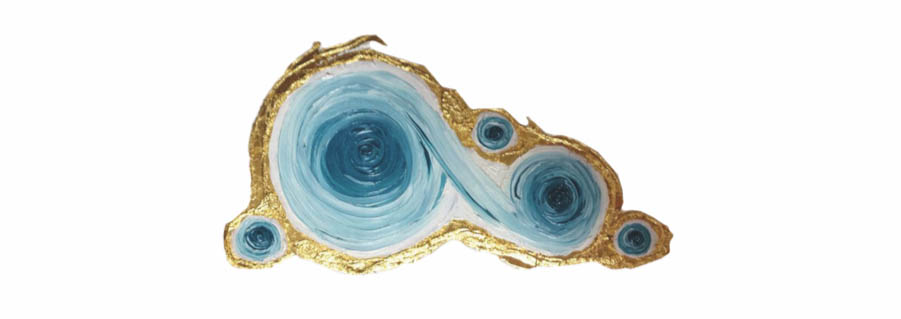
24K Gold (99,9%), Urushi, Oil Colors & natural stones.
The high-end contemporary art market has traditionally operated under a strict, unwritten script. The rules of visibility, valuation, and distribution are usually dictated by a hermetic circle of intermediaries. However, these structures are shifting. The model of absolute independence championed by Sonia G Caballero has consolidated itself as one of the most audacious, talked-about, and disruptive phenomena in today’s international art collecting scene.
Breaking away from the traditional circuit is no easy path, but in this case, it has become the artist’s greatest strategic strength. Below, we analyze how her independent model competes against the system of major art corporations.
1. Control of the Narrative and Creative Freedom
In the traditional circuit, art galleries tend to homogenize production. They frequently impose specific formats, trends, or themes on creators to adapt to the immediate and speculative demands of investment funds.
Sonia G Caballero’s independent strategy completely eliminates this filter. By not relying on art dealers or external commercial guidelines, the artist possesses absolute freedom to investigate avant-garde projects, such as her celebrated trilogy based on quantum physics and gene activation. Total control over the narrative endows the work with a radical authenticity and a conceptual value free from temporary compromises.

2. Direct Relationship (P2P) and Reinvestment in Materials
The conventional model of intermediation is structurally expensive: a gallery or auction house typically absorbs 50% (or more) of a work’s sale value. Furthermore, it is common practice to obscure the identity of the final buyer to retain a monopoly over the commercial relationship.
In contrast, the artist’s business model is built on verticality and transparency:
- Direct channels: Through her E-Art-Store and the exclusivity of her private ateliers (previously managed in Andorra and currently from Dubai).
- Value retention: By eliminating intermediaries, 100% of the artwork’s value is retained.
- Uncompromising quality: This margin allows for direct reinvestment in noble materials of the highest cost and purity, such as 24K gold and platinum imported from Japan.
- Institutional bond: It facilitates a relationship of absolute confidentiality and direct trust with major magnates and Royal Houses.

3. The Legitimation of Value vs. Speculation
Who decides the price of art? In the major capitals of the market, an artist’s valuation is usually the result of an invisible committee of gallerists, critics, and auction houses operating under the logic of financial speculation.
The Sonia G Caballero brand redefines this process. Her masterpieces are valued with a starting price of millions of euros. This valuation does not depend on the fluctuations of the secondary market; instead, it is anchored by three solid pillars:
- The intrinsic value and permanence of the noble materials used.
- The weight of a robust cultural diplomacy.
- The institutional endorsement of the Government and the Royal Family of the United Arab Emirates.

170 X 100 cm, Silver, Urushi, Oil color
The Great Challenge of the Independent Model (And How to Overcome It)
Historically, the main disadvantage of artistic independence has been the lack of the global marketing infrastructure possessed by giants like Gagosian or Hauser & Wirth.
Sonia G Caballero has bypassed this obstacle by replacing the gallery network with state alliances and international diplomacy. By securing the strategic support of the Emirati Royal Family, the artwork does not need to compete in the commercial storefronts of New York or London; it positions itself directly at the epicenter where the decisions of the global elite are made.

24K Gold (99,9%), Urushi, Oil Colors & natural stones.
En el nuevo paradigma del lujo, la verdadera exclusividad no se encuentra en seguir las reglas del mercado, sino en tener el poder de crearlas.