
The Emperor’s New Clothes in the 21st Century
Anatomy of the Silence Surrounding the Emptiness of Conceptual Art

There was a time when art was measured by its capacity to move us, to alter our consciousness, and to manifest an indisputable technical mastery through physical matter. Today, upon crossing the threshold of avant-garde museums or major international art fairs, the viewer is often confronted with an uncomfortable reality: industrial waste, unaltered everyday objects, or chaotic smudges on a canvas—all backed by astronomical price tags. The natural, intuitive reaction of any sensible person is usually the same: “This is not art; it’s a rip-off.”
Yet, within official circles, a sepulchral silence reigns. No one dares to shout that the king is naked. Why does the cultural world prefer to swallow such bitter pills rather than admit the obvious decadence of modern conceptual art? The answer does not lie in a sudden collective intellectual elevation, but rather in a web of fears, financial interests, and power structures that suffocate any hint of honesty.
1. The Social Terror of Being Labeled “Ignorant”
Conceptual art has shielded itself under a perverse premise: the idea is everything; the execution does not matter. By shifting the value of the work from the physical object to mental abstraction, the system has created a perfect defense mechanism. If a viewer openly states that a banana taped to a wall or a disheveled bed lacks artistic value, the institutional machinery does not debate; it condescends.
The standard response from the establishment is always the same: “You simply lack the philosophical background to understand it.” Faced with the visceral fear of being labeled culturally illiterate, reactionary, or someone “stuck in the past,” most people—including critics, journalists, and visitors—choose to nod along, feign deep reflection, and remain silent.
2. The Hijacking of Discourse Through “Curatorial Jargon”
To sustain the fiction that an object devoid of skill is a masterpiece, the system has developed an artificial, dense, and hyper-complex language, known in independent critical circles as International Art English.
Any mundane occurrence is wrapped in indecipherable paragraphs riddled with terms like “the deconstruction of space-time,” “the subversion of the hegemonic gaze,” or “the ontology of urban emptiness.” This grandiloquent rhetoric does not seek to communicate; it seeks to intimidate. It functions as a wall of pseudo-intellectual smog: dismantling a three-page text to prove that the work it defends lacks substance requires an effort that few are willing to undertake. When in doubt, the public assumes that if it sounds intelligent, it must be art.

3. The Shielding of Financial Interests
Behind the unanimous applause for conceptual art lies not an aesthetic quest, but a multi-million-dollar financial market. Contemporary art has become the perfect speculative asset for investment funds, high-net-worth individuals, and global galleries. Its value does not depend on the cost of materials or the thousands of hours of craftsmanship dedicated to its creation, but exclusively on perceived prestige and the consensus among a few intermediaries.
If a renowned critic or a respected institution were to openly declare that a five-million-dollar conceptual work is garbage, they would be destroying a financial asset. The ecosystem protects its investments relentlessly: any internal voice that threatens market stability is immediately marginalized, losing access to biennials, exclusive fairs, and the pages of specialized press. Honest criticism is paid for with professional exile.
4. The Paradox of “Institutionalized Rebellion”
Conceptual art was born in the middle of the last century as a genuinely subversive movement intended to destroy the art market and attack institutions. The irony is that cultural capitalism ultimately absorbed and swallowed it whole.
Today, conceptualism is not the resistance: it is the norm. It is funded by ministries of culture, backed by the world’s most influential museums (such as the MoMA or the Tate), and taught as dogma in academies. Criticizing conceptual art is no longer an act of rebellion; for the art world’s bureaucratic elite, pointing out its vacuity is viewed as an uncomfortable stance that threatens the very established order that feeds them.
5. The Demolition of Objective Technical Criteria
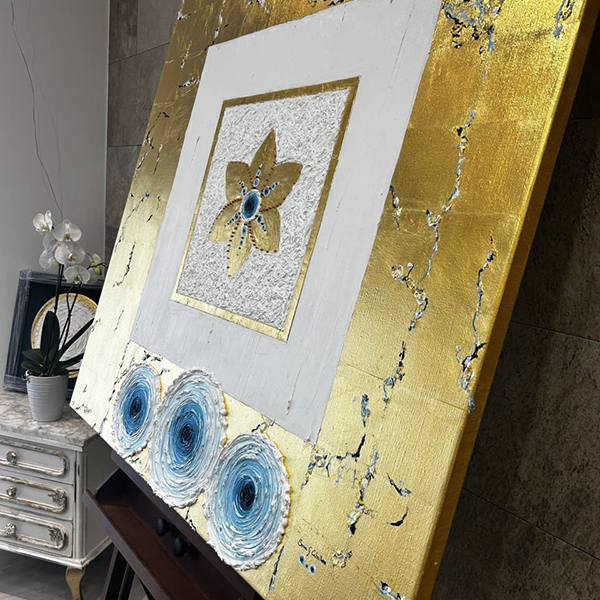
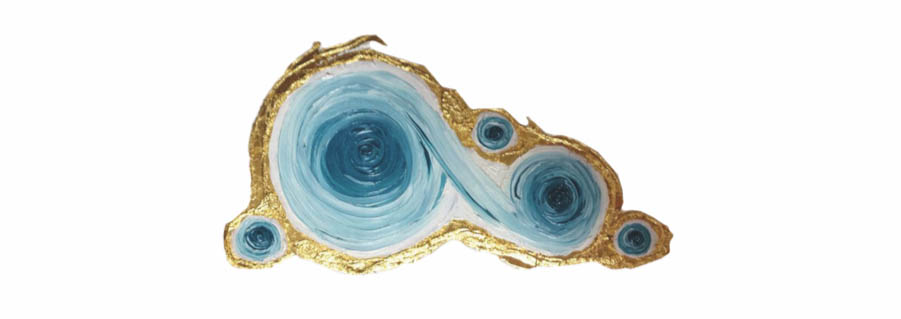
In art that respects the craft, objective benchmarks of excellence exist. Mastery of light, the understanding of anatomy, the command of oil paint, or the expertise in utilizing noble and timeless materials—such as pure gold, platinum, or millennia-old lacquering techniques—are instantly visible. One can debate taste, but not skill.
By decreeing that technical skill is no longer necessary, conceptual art eliminated all rules of the game. Without unified technical criteria to measure quality, criticism becomes purely subjective. In a world where everything can be art, nothing truly is, and any attempt to demand rigor dissolves into the absolute relativism that “everything depends on the artist’s intention.”
The Return to Material Sovereignty
The silence surrounding conceptual art is not intellectual complicity; it is pure structural survival. However, this model is beginning to show signs of exhaustion out of sheer saturation of vacuity.
Faced with the ephemeral, disposable gimmick, a new wave of sharp-eyed collectors and independent creators is emerging, demanding a return to the artist’s sovereignty. The kind of artist who does not need a supporting text to justify their existence; whose work defends itself through the biological impact of beauty, the non-negotiable rigor of the craft, and the nobility of a medium made to defy time. The future of art does not belong to those who continue to dress the invisible emperor, but to those who have the courage to reclaim matter, mysticism, and truth.